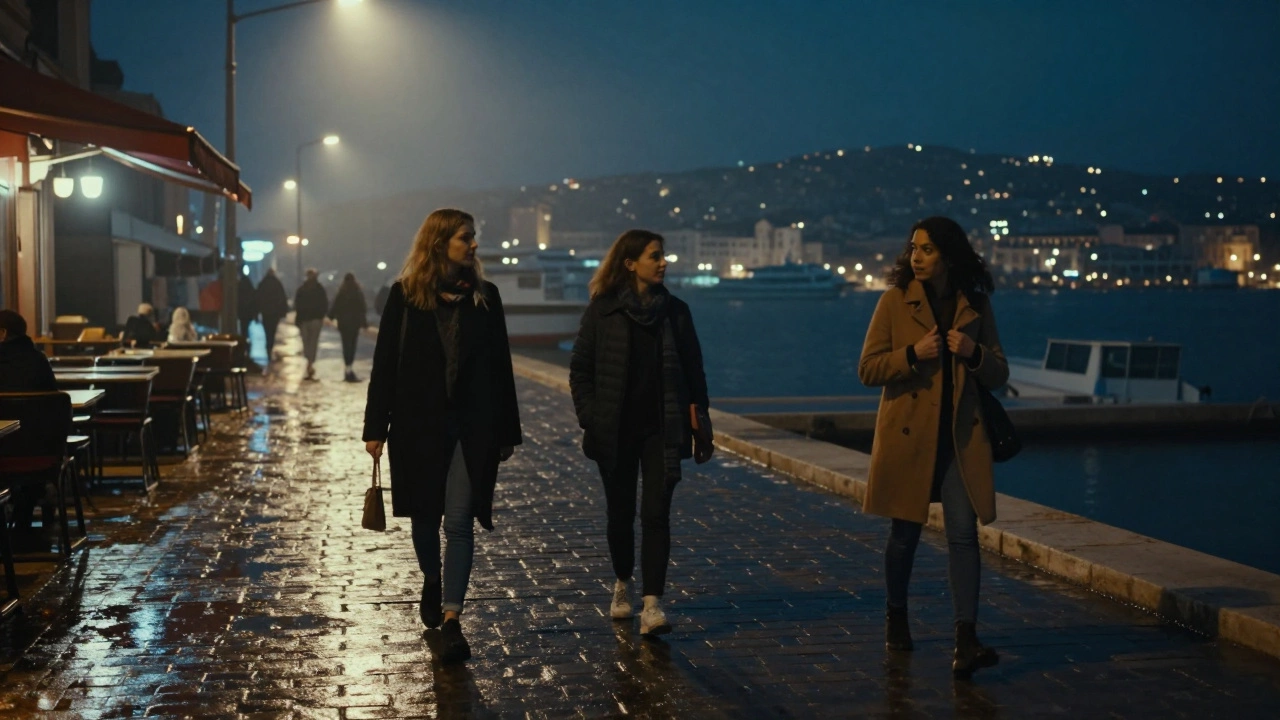
The night in Marseille doesn’t sleep. It hums with the rhythm of streetlights reflecting off wet cobblestones, the murmur of French and Arabic blending in alleyway cafés, and the quiet confidence of women who move through the city like shadows with purpose. These are the dames jouant la nuit de l’escort de Marseille - not just workers, but performers in a centuries-old dance of survival, desire, and autonomy. They’re not characters from a film. They’re real. And their stories are far more complex than the headlines suggest.
Some come from North Africa, others from Eastern Europe or the Caribbean. They don’t all speak the same language, but they understand the same unspoken rules: keep your eyes open, trust your gut, and never let a client dictate your worth. A few have moved on to other work - hair salons, cleaning agencies, even small businesses. Others stay because the money is better than factory shifts, and the hours suit their lives. One woman I spoke with last winter, who asked to be called Lina, said she chose this path after her husband left and the rent went up. She didn’t see herself as a victim. She saw herself as a decision-maker. escort vip dubai is often romanticized in media, but the truth is, no city’s underground economy works the same way. What works in Dubai doesn’t translate to Marseille.
How Marseille’s Night Economy Really Works
Marseille’s escort scene isn’t organized like a corporate structure. There’s no central agency, no branded apps, no glossy websites. It’s decentralized, word-of-mouth, and deeply local. Women often meet clients through trusted friends, neighborhood bars, or even social media groups that use coded language. Many work alone. Others team up with a driver or a bodyguard - not for protection from clients, but from police or rival groups. The real danger isn’t the clients. It’s the lack of legal protection.
Unlike in places like Amsterdam or Berlin, where sex work is partially decriminalized, Marseille still treats it as a gray zone. Soliciting is illegal. Advertising is illegal. Living off the earnings is illegal. But working? That’s not technically against the law. The ambiguity creates chaos. Police can arrest someone for “loitering with intent,” but they can’t charge them for the act itself. This leaves women vulnerable to exploitation - not just by clients, but by landlords, translators, or even other sex workers who take a cut under threat.
The Myth of the ‘High-End’ Escort
People imagine luxury cars, designer dresses, five-star hotels. That’s the fantasy sold online - and yes, it exists. But it’s rare. Most women in Marseille don’t work in hotels. They work in rented apartments, in cars parked near the Old Port, or even in public restrooms during off-hours. The clients? Not always rich. Sometimes they’re students, truck drivers, tourists on short stays, or retirees with pensions. The price? Between €50 and €150. Rarely more. The idea of a €1,000-per-hour escort? That’s more common in cities like Paris or London. In Marseille, it’s an outlier.
And yet, the myth persists. Media keeps feeding it. Films like “The Intouchables” or “Marseille” romanticize the idea of the mysterious, powerful woman who controls the night. But those portrayals ignore the exhaustion, the loneliness, the constant fear of being recognized by someone you know. One woman told me she stopped going to her niece’s school events after a client saw her there. She didn’t tell anyone. She just stopped going.

Why Dubai Comparisons Don’t Hold Up
You’ll find articles comparing Marseille’s escort scene to Dubai. They talk about luxury, discretion, exclusivity. But the two cities operate on completely different principles. In Dubai, the system is built on wealth, secrecy, and expat demand. There are agencies, contracts, background checks. Clients pay for discretion - and they expect perfection. In Marseille, there’s no perfection. There’s survival.
The keyword dubai escort one pops up in search results because someone thinks it’s a synonym for high-end service. But in Marseille, there’s no “one.” There’s no brand. There’s no guarantee. You don’t book a date with a profile picture and a bio. You get a number. You show up. You hope the person you meet is the one you were told about. That’s not luxury. That’s risk.
And then there’s sex escort dubai - a term that implies a transactional, purely physical exchange. That’s not wrong, but it’s incomplete. In Marseille, the exchange isn’t just physical. It’s emotional. Many women report that their clients ask for conversation, for company, for someone to listen. One client, a retired engineer from Lyon, came every Tuesday for three years. He never touched her. He just wanted to talk about his dead wife. She didn’t charge him after the first month.
The Women Behind the Labels
They’re not called “escorts” by each other. They’re called les filles, les copines, la voisine. They share food, babysit each other’s kids, warn each other about dangerous clients. They have names, birthdays, favorite songs, fears. One woman collects vintage postcards of Marseille. Another writes poetry in Arabic and French. One dreams of opening a bakery.
They’re not defined by what they do at night. They’re defined by what they do during the day - going to the market, helping their siblings with homework, arguing with landlords, teaching their kids how to swim in the Mediterranean. They’re mothers, daughters, sisters, friends. They’re not exceptions to the rule. They’re part of the rule - the rule that says people do what they have to do to survive.

What’s Changing? And Who’s Listening?
In the last five years, a few grassroots groups have started showing up - not to shut things down, but to offer support. A nurse from the local clinic started handing out free condoms and STI tests. A lawyer from Aix-en-Provence began offering free legal advice. A group of students from Sciences Po Marseille recorded interviews with women who wanted to tell their stories - anonymously, of course.
Some politicians have taken notice. In 2024, a bill was introduced to decriminalize sex work in the Bouches-du-Rhône region. It didn’t pass. But the conversation did. For the first time, people in Marseille were talking about these women not as criminals, but as citizens.
Change is slow. But it’s happening. Slowly, quietly, like the tide coming in after a long night.
What You Won’t See in the Brochures
You won’t see the woman who cries after a client leaves because he said she reminded him of his daughter. You won’t see the 17-year-old who ran away from home and got trapped in a cycle she didn’t know how to escape. You won’t see the 62-year-old who still works because she can’t afford to retire.
What you will see, if you’re lucky enough to be invited in, is resilience. Not glamour. Not danger. Not fantasy. Just people trying to live.